The Preview Is Not the Performance
An entertainment preview can earn trust by revealing a show’s distinctive voice without flattening its surprises into a promise the live event cannot keep.
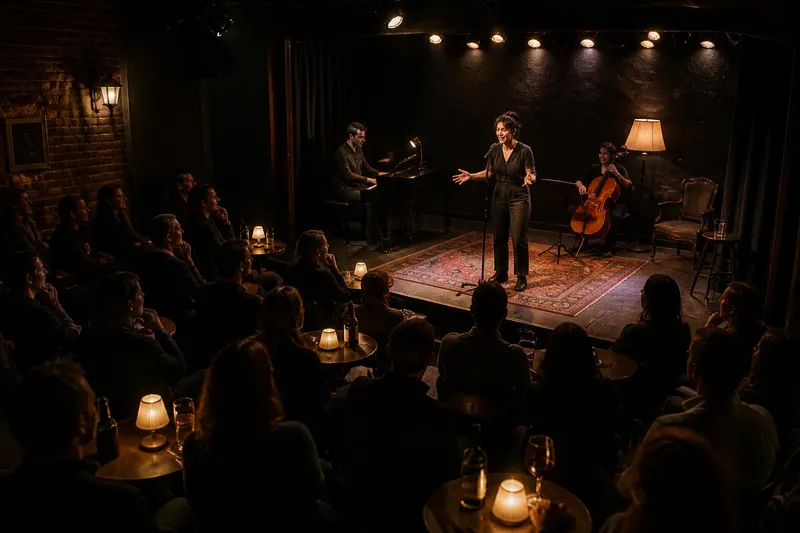
An entertainment preview earns trust when it reveals a show’s distinctive voice without pretending to reproduce the room. A clip or excerpt can help a prospective audience decide whether to attend, but its framing should make clear what the sample represents—and what it leaves for the performance itself.
That editorial task is different from listing event details. It is about choosing a fragment that gives a fair sense of the show’s artistic character, then resisting the temptation to make that fragment stand in for the whole evening.
Use the preview to show artistic character
Begin with a specific question: what should a newcomer recognize about this show after seeing the preview? The answer might be the performers’ dry timing, the mix of live music and spoken stories, or the way a scene shifts from gentle to absurd.
That answer helps distinguish an artistic sample from a highlight reel. A sequence of applause, quick cuts, and big gestures may suggest energy, but it can obscure the qualities that actually shape the performance.
Write down the event’s central qualities in plain language before selecting material. Keep each quality tied to something observable, such as the use of audience suggestions, an ensemble format, or a blend of scripted scenes and songs.
Select a fragment that does not distort the whole
Choose material for what it communicates, not merely for how readily it catches attention. A pause, a quiet exchange, or a transition between acts may tell viewers more about an intimate show than its loudest reaction.
Then consider what the selection could lead someone to assume. A close camera angle can make a small performance look like a solo act; a comic opening can make a varied bill appear to be comedy from end to end. Add a short clarification when the sample’s limits would otherwise be easy to miss.
Say you are promoting a cabaret with a comic opening followed by songs and personal stories. You choose a lively opening excerpt, state that the bill moves among comedy, music, and storytelling, and identify the clip as a sample of the opening act. A viewer can then recognize the show’s energy without mistaking one performer’s style for the entire evening.
Give context that protects the audience’s expectations
Useful framing tells viewers what they are seeing and how it relates to the full event. “A sample from the opening set” is more informative than a caption that treats the clip as a complete portrait of the show.
Be careful with material that changes from performance to performance. If audience suggestions shape an improvised scene, say that the scene may vary; if the running order can change, describe the range of acts rather than promising a fixed sequence.
Keep artistic context separate from logistics. The preview can explain the form and tone, while the event listing handles venue information, entry, and participation expectations. Each part should answer its own question without crowding out the show’s character.
Keep editing faithful to the live material
A video excerpt should have enough context to make sense, but it need not deliver a routine’s payoff or reveal a scene’s turn. Avoid edits that manufacture laughter, conceal a quiet atmosphere, or join unrelated moments into an event that never occurs in that order.
Still images have their own limits. A frame showing several performers may better represent an ensemble show than a striking close-up that implies a solo act. A program excerpt or audio sample can also help, as long as the accompanying text says what it comes from.
Make the sample accessible without adding unsupported claims. Caption spoken content accurately, describe meaningful visual details in image text, and confirm any venue-specific access information with the organizer before publishing.
Check whether the preview leaves the right impression
Read the caption and view the asset as someone who knows none of the performers. Each check below pairs a concrete observation with a decision, so the editor can make a clear adjustment rather than relying on a vague sense that the preview feels right.
- Format: If the caption does not identify whether this is a solo set, showcase, or mixed bill, add the event format; if the format is already clear, keep the wording concise.
- Range: If the clip shows only one style from a varied bill, name the other forms in the caption; if it represents the range fairly, let the clip carry more of the explanation.
- Performer: If one person dominates the frame but the event is an ensemble, identify the excerpt as that performer’s segment; if the show is built around that person, describe the format directly.
- Tone: If the edit makes a quiet room appear raucous, choose a more representative passage; if the atmosphere is accurately conveyed, retain the edit.
- Reveal: If the clip gives away a scene’s central turn, trim it before that moment or choose another passage; if it shows style without disclosing the payoff, keep it.
- Improvisation: If the sample depends on audience input, say that the material can vary; if it is scripted, avoid suggesting that it changes from show to show.
- Accessibility: If spoken words or meaningful visual information are missing from captions or image text, add that information; if it is already present and accurate, publish without duplicating it.
These checks are editorial safeguards, not a demand to explain every artistic choice. Their purpose is to catch the gap between what the preview shows and what a new viewer may reasonably expect to see.
How much should an entertainment preview reveal?
Should a promotional clip show the best moment?
A strong moment can communicate a performer’s style, but a carefully built payoff may be better left for the room. Choose a passage that shows the work’s character without spending the surprise that gives the live scene its shape.
How long should an entertainment preview be?
Use enough material to make the format and tone legible, then stop. A compact excerpt with clear framing can be more revealing than a montage that rushes through disconnected reactions.
What if one clip cannot represent the whole show?
Pair the clip with a short description of the other forms or performers, or use distinct samples labeled by act or style. Do not imply that one fragment represents a varied bill in full.
How can an entertainment preview preserve surprises?
Choose a passage that establishes the show’s voice without exposing its central reveal, and identify the passage’s place in the event. If the best available clip gives away too much, select a quieter moment or use a still image with accurate context.
Let the live event complete the invitation
Review the clip, caption, and event description as one piece of publicity. The clip can convey texture, the caption can explain its limits, and the listing can answer practical questions without asking any one element to do everything.
A well-framed entertainment preview helps someone recognize the kind of evening being offered while leaving the performance’s timing and shared discoveries intact. Its most useful promise is modest: this is a fair glimpse of the show, not a substitute for being there.